China has been basking in the glory and victory of the 2008 Olympic Games, which has demonstrated the nation's economic strengths and capabilities.
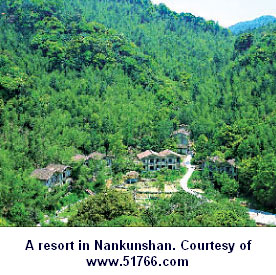
Right after the closing ceremony of the Beijing Olympics, I went to an equally exciting event at Nankunshan Nature Reserve. After traveling for two hours by car from the city of Guangzhou, I arrived at the most refreshing mountain forest that was set in a spectacular landscape. I was surrounded by ancient trees, a sea of clouds and a wide spectrum of wild life.
I felt genuinely honored to be on this trip with nine other specialists and 53 officers from all nature reserves in Guangdong province. The trip, which was a 5-day seminar, was organized by the Nature Reserve Management Office on the mainland to raise awareness in wildlife protection and to contribute to the welfare and economy of the country.
Apart from maintaining a healthy eco-system and conserving areas with wildlife species, the mainland government is actively seeking to develop such fragile areas in a sustainable way.
The seminar covered topics that are worth brainstorming, especially in a time where most people care only about speedy economic development.
Nature reserves and national parks are facing problems brought by the excessive human population growth. For instance, the exploitation of natural resources for consumption and recreation. The worst form of development is to let greedy developers build a huge artificial dreamland, which usually not only fails to harmonize with the natural environment, but also dehumanizes the uniqueness and characters of the sites.
The seminar discussed controversy and arguments over such issues, and we were eager to come up with a blueprint for securing a sustainable future for the mainland.
Does development inevitably lead to the destruction of nature and culture?
Chen Yujun, a pioneer and independent resort consultant, has proved otherwise. He made a remarkable and empowering speech on one of his eco-resorts, which was built at the highest and longest forest park on the mainland. It established a strong bonding with the community by using local resources and creating employment for villagers, rather than forcing them to look for a job elsewhere.
The sharing of other researchers and wildlife photographers from the South China Institute of Endangered Animals has given me a vast amount of valuable information.
Li Shingche from the International Wildlife Fund for Endangered Species, Chengdu, demonstrated the importance of education among the community in protecting the environment. The more people understand the relationship between development and conservation, the easier it is to protect mother nature.
Liao Guangshe from Nature Reserve of Guangdong is surely a practical administer of the government who was happy to share with me his eagerness and concern to open up remote territories in the province. He gave every participant a copy of Green Globe 21 with Chinese translation. Green Globe 21 is a worldwide benchmarking and certification program facilitating sustainable travel and tourism for consumers, companies, and communities. Liao, as the person in charge of the training program, wanted to provide tourism authorities with the latest information on international sustainable tourism.
As one of the speakers at the seminar, I urged the participants to think about what kind of development there should be for the last scenic paradise on the mainland.
With the Beijing Olympics, China took the world by surprise. Maybe she can do it again by creating its own brand of eco-tourism.
The author is the marketing development director of HK Discovery.
(China Daily September 4, 2008)




